IAP 2026: Expanding Horizons in Computing
For the third year, Expanding Horizons in Computing explored key topics in computing and artificial intelligence through three workshops organized by MIT faculty. Spanning themes from human intelligence to coding to education, the series offered a compelling look at the opportunities and challenges shaping the future of computing.
Hosted by the MIT Schwarzman College of Computing, the workshops were held during MIT’s January Independent Activities Period in 2026.
Links to videos from the sessions are below. Or explore the full playlist on our YouTube channel.
Organizer
- Armando Solar-Lezama, Distinguished Professor of Computing, MIT Electrical Engineering and Computer Science (EECS)
An exploration of how AI is transforming the way we code.
Automation from the Programmer’s Apprentice to Modern Coding Agents
Armando Solar-Lezama, Distinguished Professor of Computing, MIT EECS
Modular & Legible Software for AI (& Human) Coders
Daniel Jackson, Professor of Computer Science, MIT EECS
Lessons from the Trenches on Building Usable Coding Agents
Graham Neubig, Associate Professor, Carnegie Mellon University Language Technology Institute; Chief Scientist, OpenHands
AI Coding & Learning
Grace Lin, Learning Scientist & Assessment Designer, MIT Scheller Teacher Education Program
Interview with Vahrun K. Mohran of Google DeepMind
Varun K. Mohan, Google DeepMind Engineer; former Co-founder & CEO, Windsurf
Armando Solar-Lezama, Distinguished Professor of Computing, MIT EECS (moderator)
AI & Coding Panel Discussion
Robert Brennan, CEO, OpenHands
Tim Kraska, Associate Professor, MIT EECS
Grace Lin, Learning Scientist & Assessment Designer, MIT Scheller Teacher Education Program
Graham Neubig, Associate Professor, Carnegie Mellon University Language Technology Institute; Chief Scientist, OpenHands
Armando Solar-Lezama, Distinguished Professor of Computing, MIT EECS (moderator)
Organizer
- Jim DiCarlo, Director, MIT Siegel Family Quest for Intelligence; Peter de Florez Professor, Department of Brain and Cognitive Sciences
Presented by the MIT Siegel Family Quest for Intelligence (SQI), this workshop examined the evolving relationship between human intelligence and artificial intelligence.
Overview of Quest Platforms
Erik Vogan, executive director of the MIT Siegel Family Quest for Intelligence
Cognitive Modeling Approaches
Josh Tenenbaum, SQI Director of Science; Professor, Department of Brain and Cognitive Sciences, MIT
Embodied Intelligence: Understanding and Acting in the Physical World
Leslie Kaelbling, SQI Director of Research; Panasonic Professor, Department of Electrical Engineering and Computer Science, MIT
Running Behavioral Experiments With Nodekit
Michael Lee, SQI Intelligence Observatory Research Scientist
Introduction to Brain-Score
Kartik Pradeepan, SQI Brain-Score Research Scientist

Organizers
- Sam Madden, Faculty Head of Computer Science, MIT Electrical Engineering and Computer Science (EECS); College of Computing Distinguished Professor
- Eric Klopfer, Professor and Director, MIT Scheller Teacher Education Program and Education Arcade
Gain a deeper understanding of the applications and impact of AI in education.
Opening Remarks
Sam Madden, Faculty Head of Computer Science, MIT EECS; College of Computing Distinguished Professor
Eric Klopfer, Professor and Director, MIT Scheller Teacher Education Program and Education Arcade
AI as TA: Teaching With AI in Intro to Machine Learning
Shen Shen, Lecturer, MIT EECS
Use of AI in MIT Language Programs
Per Urlaub, Director, Global Languages; Professor of the Practice of German and Second Language Studies, MIT
Use of AI in the MIT Writing Program
Michael Trice, Lecturer, Writing, Rhetoric and Professional Communication, MIT
Experiences With AI in the Software Engineering Capstone
Daniel Jackson, Professor of Computer Science, MIT EECS
Panel Discussion: How Does AI Affect How We Learn?
Jacob Andreas, Associate Professor, EECS
Eric Klopfer, Professor and Director, Scheller Teacher Education Program and Education Arcade, MIT
Eric So, Sloan Distinguished Professor of Global Economics and Behavioral Science, MIT
Yael Vinker, Postdoctoral Researcher, MIT EECS & CSAIL
Melissa Webster, Senior Lecturer, Managerial Communication, MIT Sloan School of Management
Navigating Teaching and Assessing Student Learning in the GenAI Era
Lourdes Aleman, Associate Director, MIT Teaching + Learning Lab
Explore Past Sessions
IAP 2025
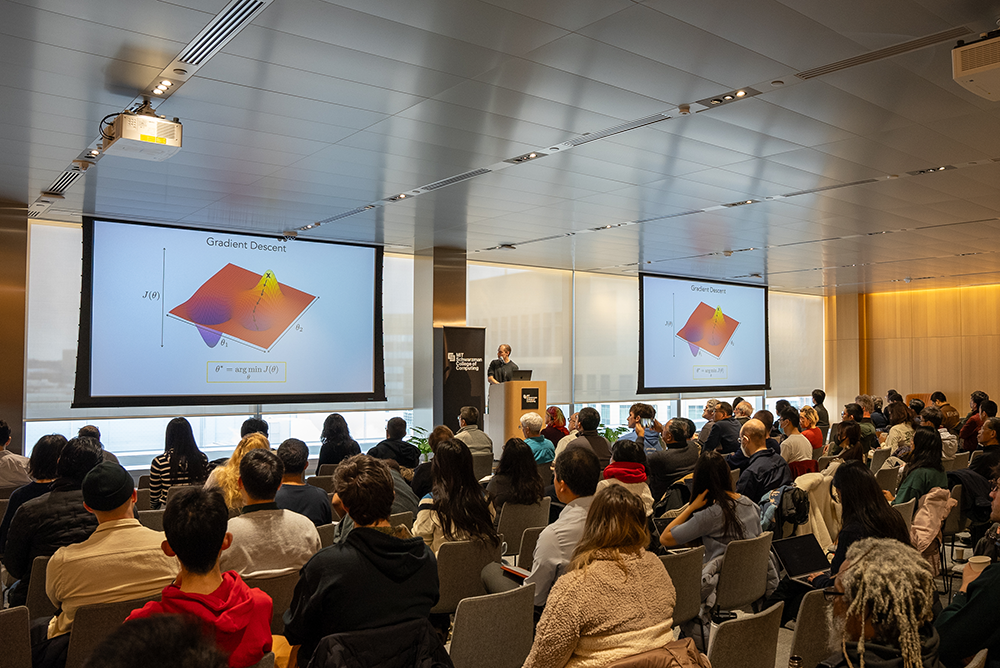
From deep learning and societal impacts to cryptography, security, and quantum technologies, last year’s Expanding Horizons in Computing sessions offered a compelling look at the opportunities and challenges shaping the future of computing.
IAP 2024
The inaugural Expanding Horizons in Computing series comprised 12 sessions that explored a wide range of topics in computing and AI, including security, intelligence, deep learning, design, sustainability, and policy.