Building with AI: A Hands-On Course for Scientists and Engineers
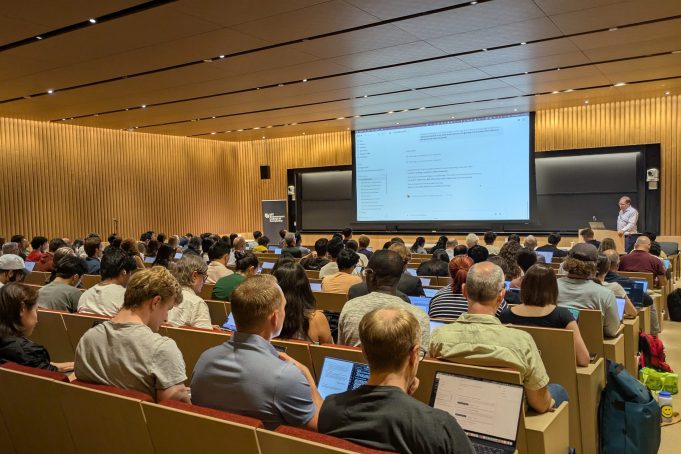
From August 31 to September 4, the MIT Schwarzman College of Computing hosted Building with AI: A Hands-On Course for Scientists and Engineers, a five-session workshop for MIT faculty, principal investigators, and graduate students
Participants explored practical ways to apply AI in research and engineering — from automating routine tasks and using AI coding copilots to preparing data and adapting foundation models for domain-specific challenges. Designed for participants with or without prior coding experience, the workshop emphasized thoughtfully integrating AI into real workflows, grounding its use in domain expertise, and validating outputs responsibly.
Led by Wojciech Matusik, Cadence Design Systems Professor of Electrical Engineering and Computer Science at MIT, and Hanspeter Pfister, An Wang Professor of Computer Science at the Harvard John A. Paulson School of Engineering and Applied Sciences, the workshop offered an engaging and thought-provoking learning experience.
Modules
AI agents do not just answer questions; they take actions. They use tools, retrieve information, and carry multi-step tasks through to a result. This module introduces what agents are and puts them to work on the kind of tasks that fill a scientist’s or engineer’s week: automating repetitive work, running scheduled jobs that execute on their own, and building reusable skills that package a workflow once and run it again on demand.
Building real software with AI copilots, with no prior coding ability assumed. This module teaches the discipline that makes copilot-driven development reliable rather than a guessing game. We cover how to write a specification that defines what a system must do and how to know when it is correct, how to decompose a problem into pieces small enough for a copilot to get right and for you to verify, and how to develop in phases where each piece is tested before the next is built on it. The same method scales from a short script to a complex system with many interacting parts.
Acquiring data from the real world: web scraping, APIs, instrument logs, public datasets, and document parsing. Cleaning, deduplication, handling missing values, unit consistency, and labeling. We also cover turning raw measurements into forms a model can use: encodings for tabular, sequence, and spatial data, normalization, and domain-specific representations such as molecules, meshes, fields, and spectra. Emphasis is on the unglamorous reality that most AI-for-science effort is spent here, and on how representation choices constrain what a model can express.
Seeing data before and after modeling, and telling stories with it. Exploratory plots, high-dimensional visualization, uncertainty display, and communicating results to scientific and engineering audiences. The focus is on using AI tools such as Claude to do this faster: generating and refining plots from a description, building interactive views without hand-writing plotting code, and iterating on a visualization in seconds rather than hours. Visualization is a debugging tool for both data and models, used to catch problems that summary statistics hide.
What pre-trained models are and how to adapt them. Transfer learning, fine-tuning, parameter-efficient methods such as LoRA and adapters, prompting, and evaluation. Applying language, vision, and scientific foundation models to engineering problems without training from scratch.
Instructors
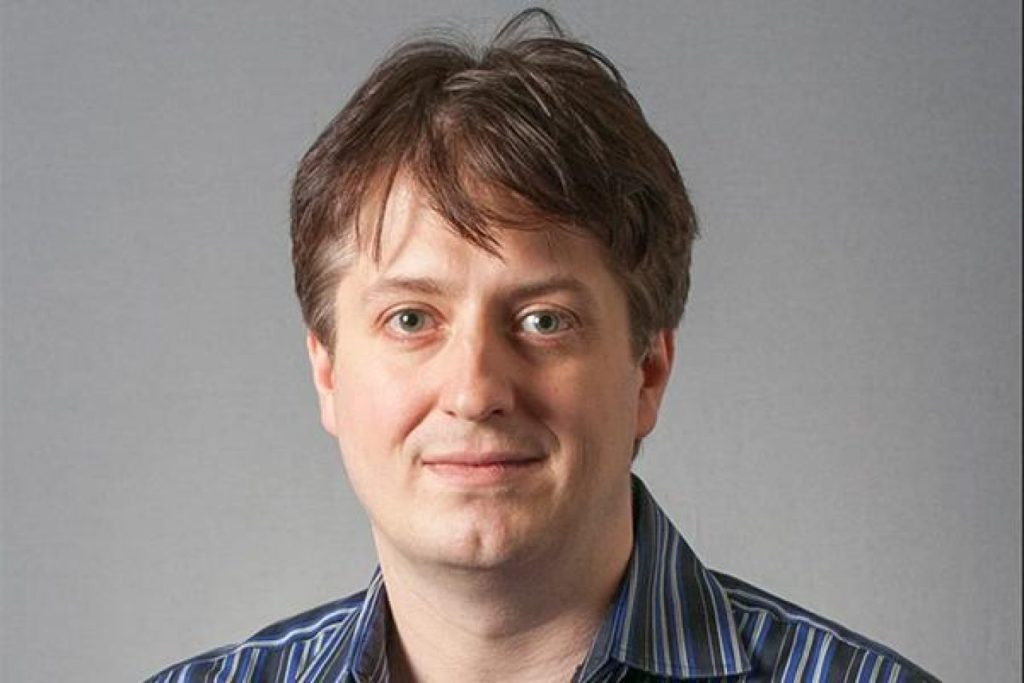
Wojciech Matusik is the Cadence Design Systems Professor of Electrical Engineering and Computer Science at MIT, with appointments in EECS and Mechanical Engineering. He leads the Computational Design and Fabrication Group at CSAIL, where his research spans computational design, computer graphics, applied machine learning, and digital fabrication. He received his B.S. from UC Berkeley and his M.S. and Ph.D. from MIT, and his work has been recognized with honors including a Humboldt Research Award, a DARPA Young Faculty Award, an ACM SIGGRAPH Significant New Researcher Award, and a Sloan Research Fellowship.
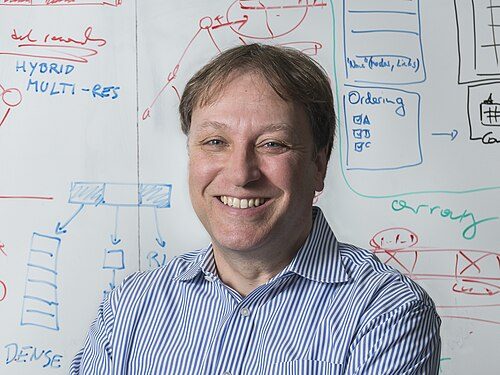
Hanspeter Pfister is the An Wang Professor of Computer Science at the Harvard John A. Paulson School of Engineering and Applied Sciences and an affiliate faculty member of the Center for Brain Science. His research in visual computing lies at the intersection of scientific visualization, information visualization, computer graphics, and computer vision, spanning biomedical image analysis, image and video analysis, and visual analytics in data science. He holds a Ph.D. in computer science from Stony Brook University and an M.S. in electrical engineering from ETH Zurich, and before joining Harvard he spent over a decade at Mitsubishi Electric Research Laboratories. He is a recipient of the IEEE Visualization Technical Achievement Award and served as technical papers chair for SIGGRAPH 2012.