News
Results
A new twist on old-school animation
MIT researchers create KineCAM, an instant camera that yields images that appear to move.

A technique to improve both fairness and accuracy in artificial intelligence
Methods that make a machine-learning model’s predictions more accurate overall can reduce accuracy for underrepresented subgroups. A new approach can help.

Costis Daskalakis appointed inaugural Avanessians Professor in the MIT Schwarzman College of Computing
Professor of electrical engineering and computer science receives additional support to advance his research and career.

Teaching AI to ask clinical questions
Researchers have made strides toward machine-learning models that can help doctors more efficiently find information in a patient’s health record.

3 Questions: Teaching computational maker skills through gaming
With FabO, PhD student Dishita Turakhia wants to empower students to learn digital fabrication by making video game objects and characters come alive.

Amazon and MIT announce Science Hub gift project awards
Four MIT professors are the recipients of the inaugural call for research projects.

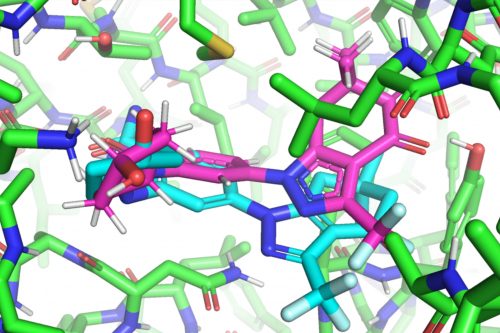
Artificial intelligence model finds potential drug molecules a thousand times faster
A geometric deep-learning model is faster and more accurate than state-of-the-art computational models, reducing the chances and costs of drug trial failures.
A programming language for hardware accelerators
Researchers created Exo for writing high-performance code on hardware accelerators.

Building explainability into the components of machine-learning models
Researchers develop tools to help data scientists make the features used in machine-learning models more understandable for end users.

Exploring emerging topics in artificial intelligence policy
The second AI Policy Forum Symposium convened global stakeholders across sectors to discuss critical policy questions in artificial intelligence.