News
Results
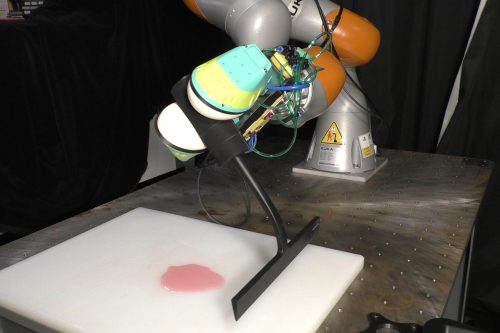
Soft robots that grip with the right amount of force
Researchers created a system that lets robots effectively use grasped tools with the correct amount of force.
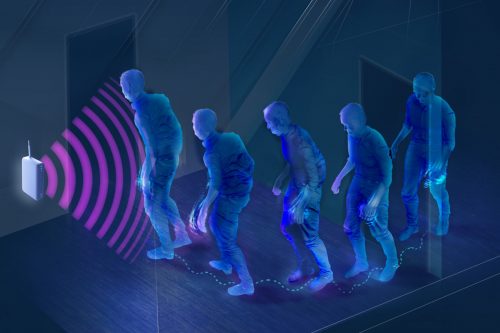
In-home wireless device tracks disease progression in Parkinson’s patients
By continuously monitoring a patient’s gait speed, the system can assess the condition’s severity between visits to the doctor’s office.
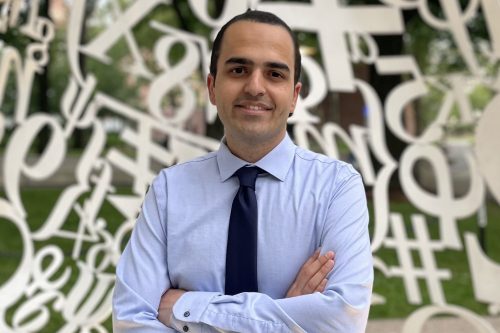
Between two universes
Mohammad Javad Khojasteh, a postdoc at MIT LIDS, uses both classical and quantum physics to improve state-of-the-art capabilities in communication, sensing, and computation.
Ethics in action
In MIT’s Experiential Ethics summer course, students grapple with real-world ethical decision making, often while interning in the very fields they’re studying.
“Kids are people too!”
Throughout his career, Professor Hal Abelson has worked to make information technology more accessible to people of all ages.

Computing for the health of the planet
The MIT Schwarzman College of Computing welcomes four new faculty members engaged in research and teaching that address climate risks and other environmental issues.

AI system makes models like DALL-E 2 more creative
Researchers develop a new method that uses multiple models to create more complex images with better understanding.

Collaborative machine learning that preserves privacy
Researchers increase the accuracy and efficiency of a machine-learning method that safeguards user data.

AI that can learn the patterns of human language
On its own, a new machine-learning model discovers linguistic rules that often match up with those created by human experts.

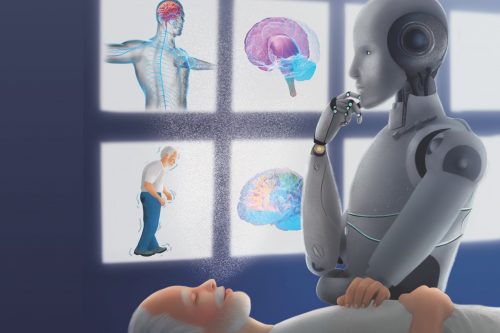
Artificial intelligence model can detect Parkinson’s from breathing patterns
An MIT-developed device with the appearance of a Wi-Fi router uses a neural network to discern the presence and severity of one of the fastest-growing neurological diseases in the world.