News
Results
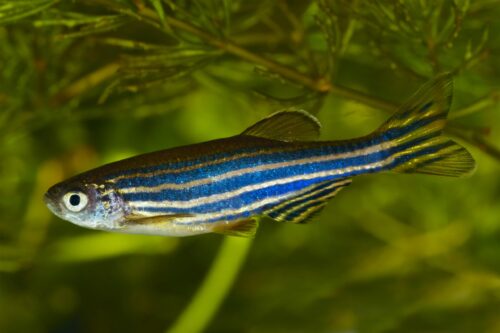
Study: Zebrafish are smarter than we thought
Researchers have discovered that the brains of these simple fish can create three-dimensional maps of their surroundings.
Empowering social media users to assess content helps fight misinformation
An experimental platform that puts moderation in the hands of its users shows that people do evaluate posts effectively and share their assessments with others.

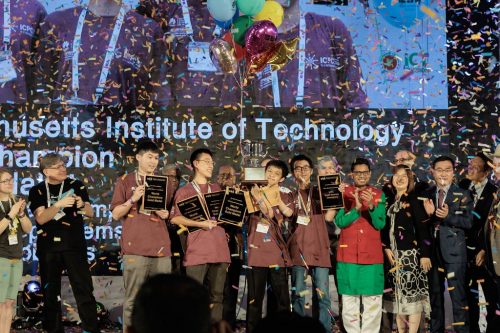
MIT wins world finals of the 45th International Collegiate Programming Contest
Students reflect on their top performance in Dhaka, Bangladesh, which ended a 44-year drought for MIT.
Solving brain dynamics gives rise to flexible machine-learning models
MIT CSAIL researchers solve a differential equation behind the interaction of two neurons through synapses to unlock a new type of speedy and efficient AI algorithm.

Ensuring AI works with the right dose of curiosity
Researchers make headway in solving a longstanding problem of balancing curious “exploration” versus “exploitation” of known pathways in reinforcement learning.

In machine learning, synthetic data can offer real performance improvements
Models trained on synthetic data can be more accurate than other models in some cases, which could eliminate some privacy, copyright, and ethical concerns from using real data.

Using sound to model the world
This machine-learning system can simulate how a listener would hear a sound from any point in a room.

3 Questions: How AI image generators could help robots
Yilun Du, a PhD student and MIT CSAIL affiliate, discusses the potential applications of generative art beyond the explosion of images that put the web into creative hysterics.

Coordinating climate and air-quality policies to improve public health
New MIT tool pinpoints policy combinations that maximize health benefits.

Deep learning with light
A new method uses optics to accelerate machine-learning computations on smart speakers and other low-power connected devices.