News
Filtered By
Results
Making data visualizations more accessible
Researchers find blind and sighted readers have sharply different takes on what content is most useful to include in a chart caption.

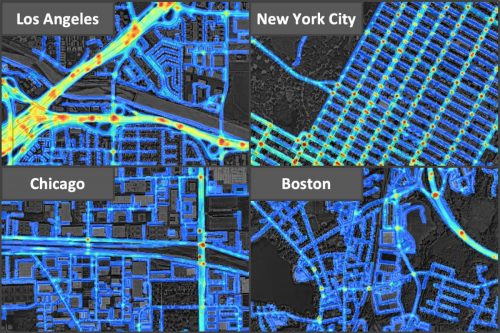
Deep learning helps predict traffic crashes before they happen
A deep model was trained on historical crash data, road maps, satellite imagery, and GPS to enable high-resolution crash maps that could lead to safer roads.
Enabling AI-driven health advances without sacrificing patient privacy
Secure AI Labs, founded by alumna Anne Kim and MIT Professor Manolis Kellis, anonymizes data for AI researchers.
3 Questions: Kalyan Veeramachaneni on hurdles preventing fully automated machine learning
Researchers hope more user-friendly machine-learning systems will enable nonexperts to analyze big data — but can such systems ever be completely autonomous?
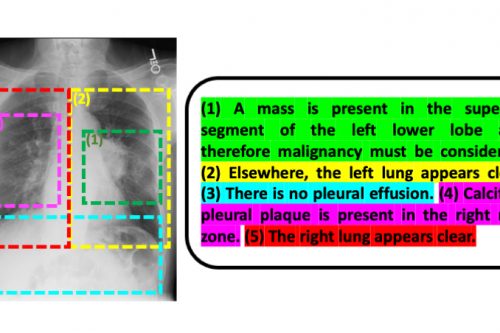
Using AI and old reports to understand new medical images
Scientists employ an underused resource — radiology reports that accompany medical images — to improve the interpretive abilities of machine learning algorithms.
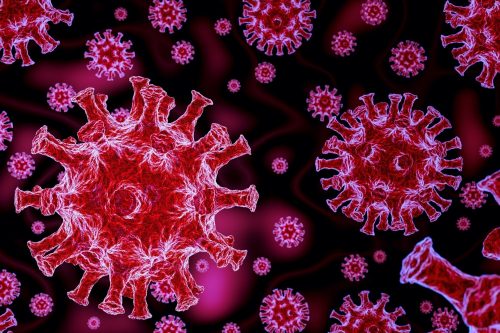
Deep learning helps predict new drug combinations to fight Covid-19
Neural network identifies synergistic drug blends for treating viruses like SARS-CoV-2.
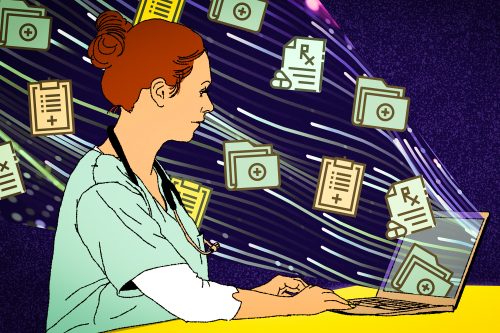
Toward a smarter electronic health record
An AI-enhanced system enables doctors to spend less time searching for clinical information and more time treating patients.
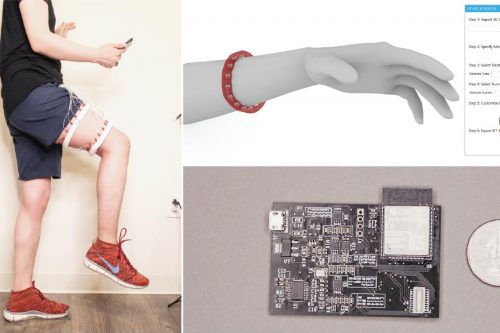
Making health and motion sensing devices more personal
An electrical impedance tomography toolkit lets users design and fabricate health and motion sensing devices.
How quickly do algorithms improve?
MIT scientists show how fast algorithms are improving across a broad range of examples, demonstrating their critical importance in advancing computing.
Making self-driving cars safer through keener robot perception
PhD student Heng Yang is developing algorithms to help driverless vehicles quickly and accurately assess their surroundings.