News
Filtered By
Results
Charting the future of AI, from safer answers to faster thinking
MIT PhD students who interned with the MIT-IBM Watson AI Lab Summer Program are pushing AI tools to be more flexible, efficient, and grounded in truth.

MIT researchers propose a new model for legible, modular software
The coding framework uses modular concepts and simple synchronization rules to make software clearer, safer, and easier for LLMs to generate.

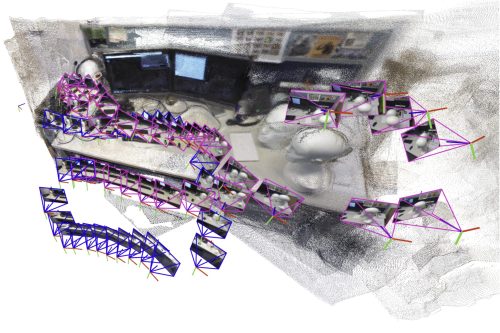
Teaching robots to map large environments
A new approach developed at MIT could help a search-and-rescue robot navigate an unpredictable environment by rapidly generating an accurate map of its surroundings.
A faster problem-solving tool that guarantees feasibility
The FSNet system, developed at MIT, could help power grid operators rapidly find feasible solutions for optimizing the flow of electricity.

3 Questions: How AI is helping us monitor and support vulnerable ecosystems
MIT PhD student and CSAIL researcher Justin Kay describes his work combining AI and computer vision systems to monitor the ecosystems that support our planet.

Charts can be social artifacts that communicate more than just data
Researchers find that design elements of data visualizations influence viewers’ assumptions about the source of the information and its trustworthiness.

Creating AI that matters
How the MIT-IBM Watson AI Lab is shaping AI-sociotechnical systems for the future.

MIT Maritime Consortium releases “Nuclear Ship Safety Handbook”
First-of-its-kind handbook serves as a guide for design safety for civilian nuclear ships.
New software designs eco-friendly clothing that can reassemble into new items
To reduce waste, the Refashion program helps users create outlines for adaptable clothing, such as pants that can be reconfigured into a dress.

Method teaches generative AI models to locate personalized objects
After being trained with this technique, vision-language models can better identify a unique item in a new scene.