News
Filtered By
Results
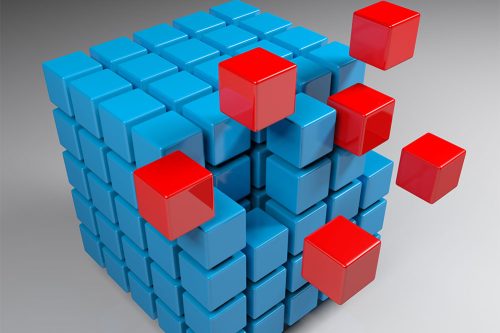
Why it’s critical to move beyond overly aggregated machine-learning metrics
New research detects hidden evidence of mistaken correlations — and provides a method to improve accuracy.
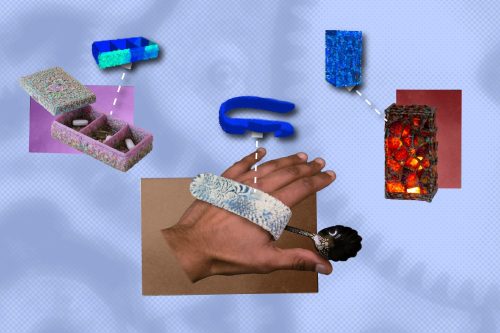
A new way to “paint with light” to create radiant, color-changing items
“MorphoChrome,” developed at MIT, pairs software with a handheld device to make everyday objects iridescent.

Efficient cooling method could enable chip-based trapped-ion quantum computers
New technique could improve the scalability of trapped-ion quantum computers, an essential step toward making them practically useful.

Generative AI tool helps 3D print personal items that sustain daily use
“MechStyle” allows users to personalize 3D models, while ensuring they’re physically viable after fabrication, producing unique personal items and assistive technology.
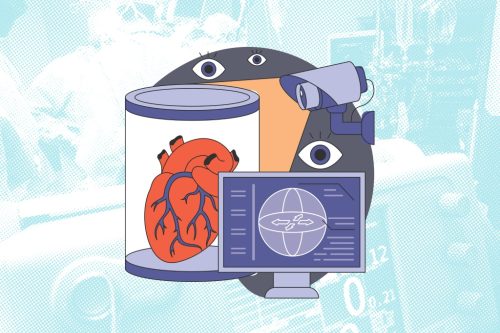
MIT scientists investigate memorization risk in the age of clinical AI
New research demonstrates how AI models can be tested to ensure they don’t cause harm by revealing anonymized patient health data.
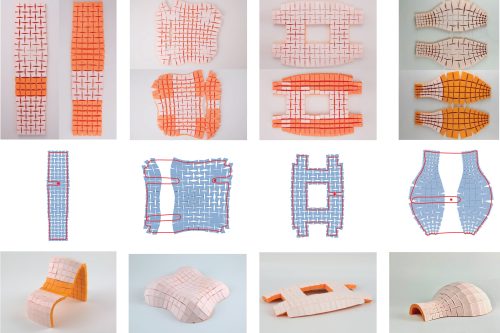
One pull of a string is all it takes to deploy these complex structures
A new method could enable users to design portable medical devices, like a splint, that can be rapidly converted from flat panels to a 3D object without any tools.
A new way to increase the capabilities of large language models
MIT-IBM Watson AI Lab researchers developed an expressive architecture that provides better state tracking and sequential reasoning in LLMs over long texts.
Guided learning lets “untrainable” neural networks realize their potential
CSAIL researchers find even “untrainable” neural nets can learn effectively when guided by another network’s built-in biases using their guidance method.
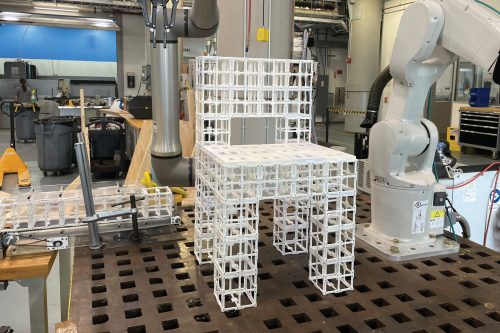
“Robot, make me a chair”
An AI-driven system lets users design and build simple, multicomponent objects by describing them with words.
New method improves the reliability of statistical estimations
The technique can help scientists in economics, public health, and other fields understand whether to trust the results of their experiments.