News
Filtered By
Results
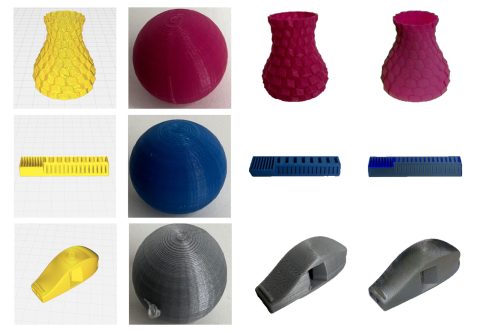
Preview tool helps makers visualize 3D-printed objects
By quickly generating aesthetically accurate previews of fabricated objects, the VisiPrint system could make prototyping faster and less wasteful.
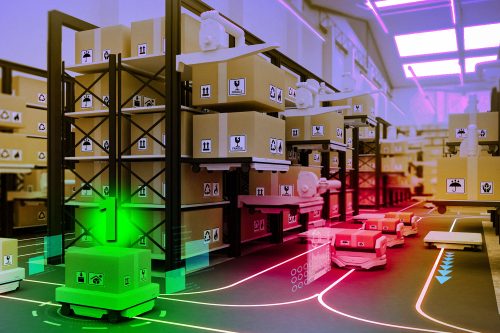
AI system learns to keep warehouse robot traffic running smoothly
This new approach adapts to decide which robots should get the right of way at every moment, avoiding congestion and increasing throughput.
Augmenting citizen science with computer vision for fish monitoring
MIT Sea Grant works with the Woodwell Climate Research Center and other collaborators to demonstrate a deep learning-based system for fish monitoring.

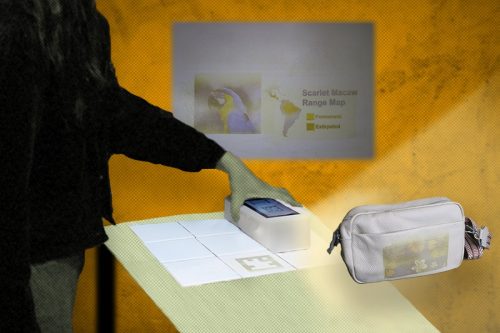
Stamping high-res imagery onto everyday items to “reprogram” their appearance
The portable “ChromoLCD” device combines LCD and LED lighting to customize high-quality designs onto things like shirts and whiteboards.
Generative AI improves a wireless vision system that sees through obstructions
With this new technique, a robot could more accurately detect hidden objects or understand an indoor scene using reflected Wi-Fi signals.
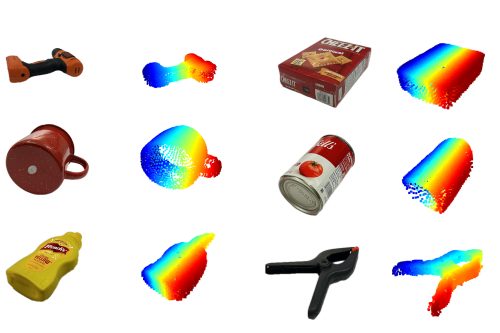
A better method for identifying overconfident large language models
This new metric for measuring uncertainty could flag hallucinations and help users know whether to trust an AI model.
Can AI help predict which heart-failure patients will worsen within a year?
Researchers at MIT, Mass General Brigham, and Harvard Medical School developed a deep-learning model to forecast a patient’s heart failure prognosis up to a year in advance.
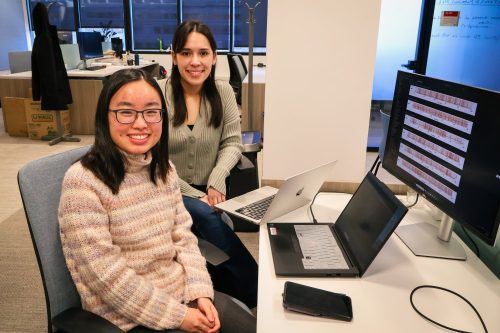
3 Questions: On the future of AI and the mathematical and physical sciences
Professor Jesse Thaler describes a vision for a two-way bridge between artificial intelligence and the mathematical and physical sciences — one that promises to advance both.

A better method for planning complex visual tasks
A new hybrid system could help robots navigate in changing environments or increase the efficiency of multirobot assembly teams.
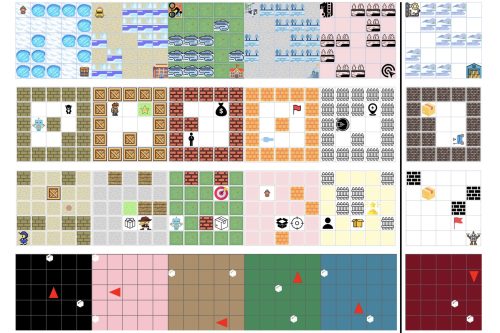
Improving AI models’ ability to explain their predictions
A new approach could help users know whether to trust a model’s predictions in safety-critical applications like health care and autonomous driving.