News
Filtered By
Results
Using generative AI to diversify virtual training grounds for robots
New tool from MIT CSAIL creates virtual kitchens and living rooms where simulated robots can interact with models of real-world objects, scaling up training data for robot foundation models.

New prediction model could improve the reliability of fusion power plants
The approach combines physics and machine learning to avoid damaging disruptions when powering down tokamak fusion machines.

Fighting for the health of the planet with AI
Assistant Professor Priya Donti’s research applies machine learning to optimize renewable energy.

AI maps how a new antibiotic targets gut bacteria
MIT CSAIL and McMaster researchers used a generative AI model to reveal how a narrow-spectrum antibiotic attacks disease-causing bacteria, speeding up a process that normally takes years.

Accounting for uncertainty to help engineers design complex systems
The approach could enable autonomous vehicles, commercial aircraft, or transportation networks that are more reliable in the face of real-world unpredictability.

System lets people personalize online social spaces while staying connected with others
By enabling users to easily create social apps that serve communities’ needs, the Graffiti framework aims to promote healthier online interactions.

Responding to the climate impact of generative AI
Explosive growth of AI data centers is expected to increase greenhouse gas emissions. Researchers are now seeking solutions to reduce these environmental harms.

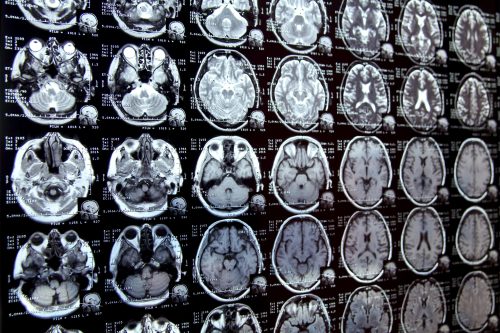
New AI system could accelerate clinical research
By enabling rapid annotation of areas of interest in medical images, the tool can help scientists study new treatments or map disease progression.
How to build AI scaling laws for efficient LLM training and budget maximization
MIT-IBM Watson AI Lab researchers have developed a universal guide for estimating how large language models will perform based on smaller models in the same family.

Machine-learning tool gives doctors a more detailed 3D picture of fetal health
MIT CSAIL researchers developed a tool that can model the shape and movements of fetuses in 3D, potentially assisting doctors in finding abnormalities and making diagnoses.