News
Filtered By
Results
Generating scenarios for extreme events, without extreme data
A new algorithm learns to anticipate the unprecedented scenarios that critical infrastructure and global supply chains are least prepared for.

Securing wireless communication in next-generation devices
A new, scalable technique could enable powerful radars and sensors based on quantum technology that works at room temperature.
When AI art has no author: Study finds generated images often can’t be traced to training data
A new method for surgically removing training examples from a model reveals that as datasets grow, the link between what a model learns and what it produces dissolves.

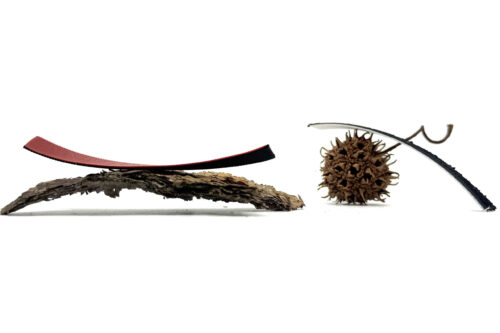
Mathematical framework connects biological principles to manufacturable, adaptive materials
The new framework could streamline the design process of robotic grippers or aerospace components that exhibit complex behaviors found in nature.
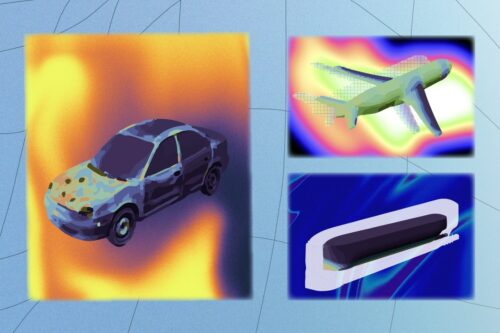
With a feel for physics, AI models simulate a wider range of real-world scenarios
“GeoPT” helps AI models understand the basics of physics so they can simulate how objects respond to things like wind and water more efficiently and accurately.
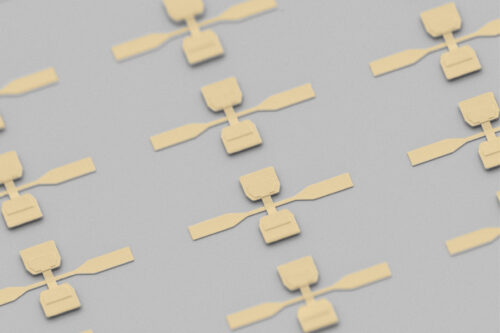
Researchers make air-stable, ultrathin superconductors, for more scalable quantum devices
A new technique produces wafer-scale samples, overcoming a major roadblock to using these materials in quantum technologies.

These 3D-printed objects can tell you if they’re being used properly
The “ShiftLens” design and fabrication system creates objects that change their surface appearance based on user interactions, without any electronics.
The benefits of medical AI assistance vary based on user expertise
Study finds non-experts deferred to LLM-based diagnostic assistance, even when it was wrong, while clinicians caught AI errors.

Turning molecules into reliable electronic devices
A new fabrication platform integrates molecules into electronic devices, opening the door to emerging computing technologies.
Daniela Rus receives Bavarian Minister-President’s High-Tech Prize
Director of CSAIL and MIT professor honored for her contributions to robotics, artificial intelligence, and autonomous systems.