News
Filtered By
Results
Clearing up a robot’s fuzzy memory
A new system identifies and corrects unreliable object descriptions stored in a robot’s memory, improving the robot’s ability to interact with its environment.

New system gives users more control over their online experience
The Social.Wiki framework enables anyone to easily edit social websites within the system, while allowing them to choose the content they see.

This design software reimagines everyday objects as self-aware devices
“X-Hinges” helps design and 3D print items like lamps and gloves with an interactive twist: automatically embedded sensors that perceive and adaptively respond to human contact.
Why teaching AI about symmetry could make prenatal diagnosis more reliable
A model developed by researchers at MIT and Boston Children's Hospital adjusts scans on the fly to track fetal movement, potentially sparing families repeat hospital visits.

Using AI to mitigate the growing environmental threat of data centers
By rethinking how large cloud computing systems operate, Associate Professor Christina Delimitrou seeks to make data centers more energy efficient.

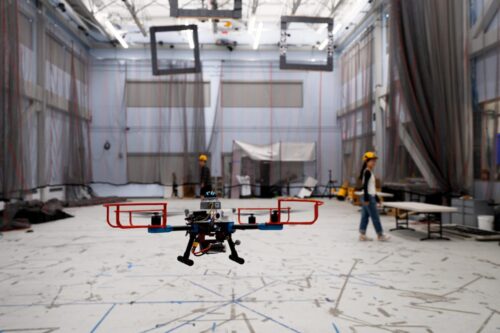
Planning system ensures a robot’s flight path will remain collision-free
This new method, called “SANDO,” could help disaster-response robots navigate dangerous, unknown environments.
Computational tools for society’s most complex challenges
Associate Professor Cathy Wu uses reinforcement learning to help map out improvements to transportation and other multifaceted systems.

New tool lets users repair AI-generated 3D models, then fabricate them just the way they want
“InstructMesh” can generate designs for everyday objects that are easy to edit and fabricate for both experts and newcomers to 3D modeling.

This game-playing AI is the new champ at Stratego
Able to defeat top-ranked human players and more efficient than other models, the new system could help decision-makers in military maneuvers or business negotiations.

The effects of an “algorithmic monoculture” depend on the details
In a study focusing on hiring decisions, MIT researchers found the use of a single algorithm by many firms could benefit job seekers in certain situations.