News
Filtered By
Results
This “smart coach” helps LLMs switch between text and code
The CodeSteer system could boost large language models’ accuracy when solving complex problems, such as scheduling shipments in a supply chain.

Can AI really code? Study maps the roadblocks to autonomous software engineering
A team of researchers has mapped the challenges of AI in software development, and outlined a research agenda to move the field forward.
How to more efficiently study complex treatment interactions
A new approach for testing multiple treatment combinations at once could help scientists develop drugs for cancer or genetic disorders.

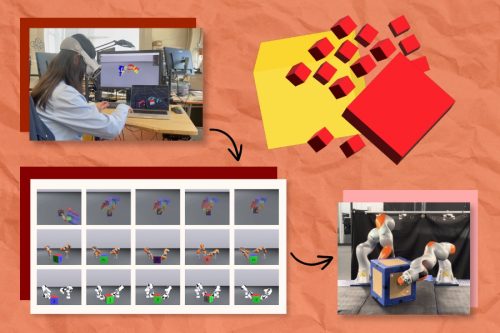
Simulation-based pipeline tailors training data for dexterous robots
The PhysicsGen system, developed by MIT researchers, helps robots handle items in homes and factories by tailoring training data to a particular machine.
AI shapes autonomous underwater “gliders”
An AI pipeline developed by CSAIL researchers enables unique hydrodynamic designs for bodyboard-sized vehicles that glide underwater and could help scientists gather marine data.

Study could lead to LLMs that are better at complex reasoning
Researchers developed a way to make large language models more adaptable to challenging tasks like strategic planning or process optimization.

MIT and Mass General Hospital researchers find disparities in organ allocation
In an analysis of over 160,000 transplant candidates, researchers found that race is linked to how likely an organ offer is to be accepted on behalf of a patient.

Second round of SERC seed grants awarded to MIT scholars
The eight selected projects propose impactful research in ethical technology development.

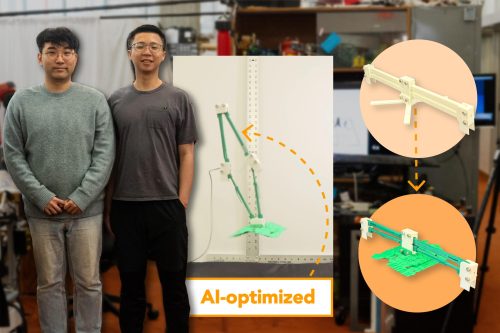
Using generative AI to help robots jump higher and land safely
MIT CSAIL researchers combined GenAI and a physics simulation engine to refine robot designs. The result: a machine that out-jumped a robot designed by humans.
LLMs factor in unrelated information when recommending medical treatments
Researchers find nonclinical information in patient messages — like typos, extra white space, and colorful language — reduces the accuracy of an AI model.