News
Filtered By
Results
Learning how to predict rare kinds of failures
Researchers are developing algorithms to predict failures when automation meets the real world in areas like air traffic scheduling or autonomous vehicles.

The sweet taste of a new idea
Sendhil Mullainathan brings a lifetime of unique perspectives to research in behavioral economics and machine learning.
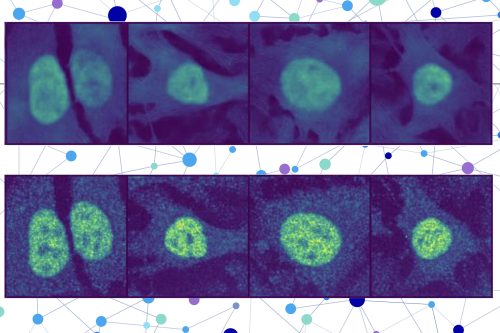
With AI, researchers predict the location of virtually any protein within a human cell
Trained with a joint understanding of protein and cell behavior, the model could help with diagnosing disease and developing new drugs.
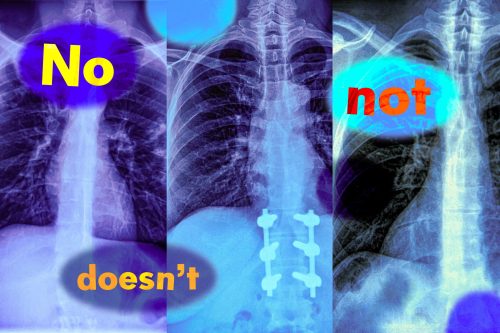
Study shows vision-language models can’t handle queries with negation words
Words like “no” and “not” can cause this popular class of AI models to fail unexpectedly in high-stakes settings, such as medical diagnosis.
System lets robots identify an object’s properties through handling
With a novel simulation method, robots can guess the weight, softness, and other physical properties of an object just by picking it up.
Hybrid AI model crafts smooth, high-quality videos in seconds
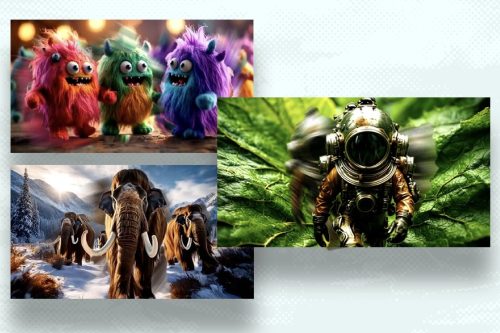
The CausVid generative AI tool uses a diffusion model to teach an autoregressive (frame-by-frame) system to rapidly produce stable, high-resolution videos.
New tool evaluates progress in reinforcement learning
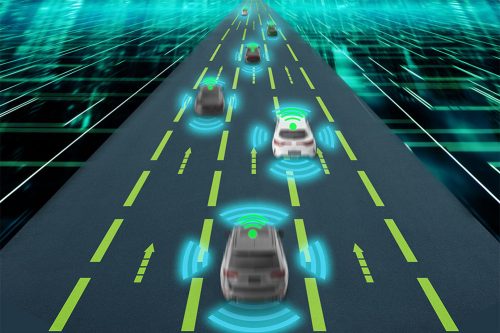
“IntersectionZoo,” a benchmarking tool, uses a real-world traffic problem to test progress in deep reinforcement learning algorithms.
Novel AI model inspired by neural dynamics from the brain
New type of “state-space model” leverages principles of harmonic oscillators.

Making AI models more trustworthy for high-stakes settings
A new method helps convey uncertainty more precisely, which could give researchers and medical clinicians better information to make decisions.
Designing a new way to optimize complex coordinated systems
Using diagrams to represent interactions in multipart systems can provide a faster way to design software improvements.