News
Results
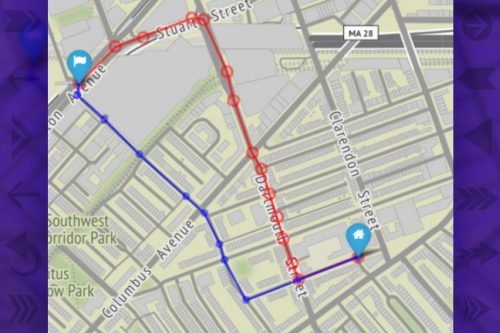
How the brain navigates cities
We seem to be wired to calculate not the shortest path but the “pointiest” one, facing us toward our destination as much as possible.
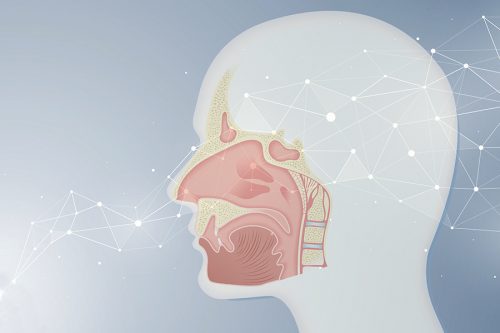
Artificial networks learn to smell like the brain
When asked to classify odors, artificial neural networks adopt a structure that closely resembles that of the brain’s olfactory circuitry.
These neural networks know what they’re doing
A certain type of artificial intelligence agent can learn the cause-and-effect basis of a navigation task during training.

Thriving Stars: A new initiative to improve gender representation in electrical engineering and computer science
MIT EECS unveils a new effort to encourage and support women on their journey to — and through — graduate study in computing and information technologies.

Making data visualizations more accessible
Researchers find blind and sighted readers have sharply different takes on what content is most useful to include in a chart caption.

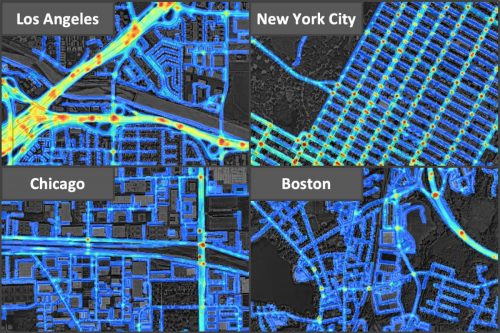
Deep learning helps predict traffic crashes before they happen
A deep model was trained on historical crash data, road maps, satellite imagery, and GPS to enable high-resolution crash maps that could lead to safer roads.
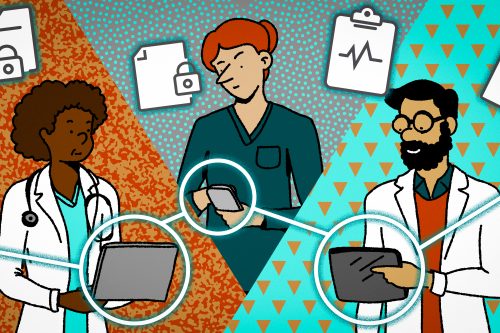
Enabling AI-driven health advances without sacrificing patient privacy
Secure AI Labs, founded by alumna Anne Kim and MIT Professor Manolis Kellis, anonymizes data for AI researchers.
3 Questions: Kalyan Veeramachaneni on hurdles preventing fully automated machine learning
Researchers hope more user-friendly machine-learning systems will enable nonexperts to analyze big data — but can such systems ever be completely autonomous?

MIT and Amazon establish the Science Hub
Administered at MIT by the Schwarzman College of Computing, the hub aims to expand participation in AI, robotics, and other fields, and ensure the benefits of this research are shared broadly.

Using AI and old reports to understand new medical images
Scientists employ an underused resource — radiology reports that accompany medical images — to improve the interpretive abilities of machine learning algorithms.