News
Results
Deploying machine learning to improve mental health
MIT scientist Rosalind Picard collaborates with clinicians to develop tools for mental health care delivery.

A new language for quantum computing
Twist is an MIT-developed programming language that can describe and verify which pieces of data are entangled to prevent bugs in a quantum program.

Seeing into the future: Personalized cancer screening with artificial intelligence
Scientists demonstrate that AI-risk models, paired with AI-designed screening policies, can offer significant and equitable improvements to cancer screening.
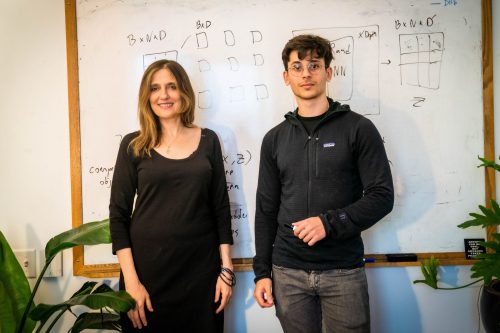
When should someone trust an AI assistant’s predictions?
Researchers have created a method to help workers collaborate with artificial intelligence systems.

Brave Behind Bars: Prison education program focuses on computing skills for women
MIT computer scientists and mathematicians offer an introductory computing and career-readiness program for incarcerated women in New England.
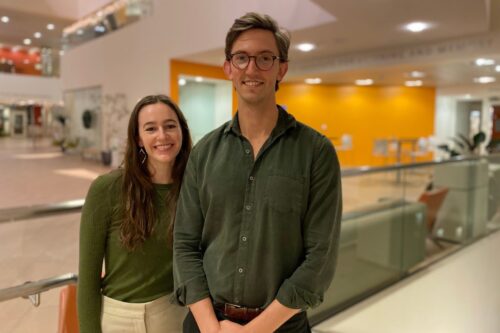
How well do explanation methods for machine-learning models work?
Researchers develop a way to test whether popular methods for understanding machine-learning models are working correctly.
Q&A: Dolapo Adedokun on computer technology, Ireland, and all that jazz
MIT EECS student and Mitchell Scholar hopes to play music in Dublin while working on his MS in intelligent systems.

Tackling hard computational problems
David Gamarnik has developed a new tool, the Overlap Gap Property, for understanding computational problems that appear intractable.

Physics and the machine-learning “black box”
In 2.C061, George Barbastathis demonstrates how mechanical engineers can use their knowledge of physical systems to keep algorithms in check and develop more accurate predictions.
Making computation come alive
A new course teaches students how to use computational techniques to solve real-world problems, from landing a spacecraft to placing cell phone towers.