News
Filtered By
Results
Computer vision system marries image recognition and generation
MAGE merges the two key tasks of image generation and recognition, typically trained separately, into a single system.

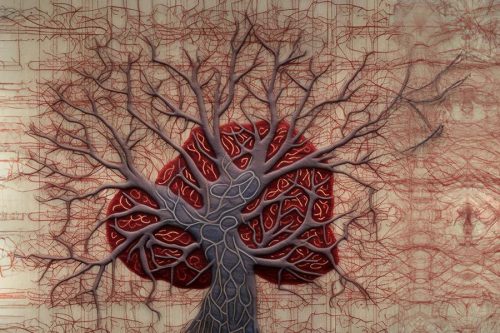
Atlas of human brain blood vessels highlights changes in Alzheimer’s disease
MIT researchers characterize gene expression patterns for 22,500 brain vascular cells across 428 donors, revealing insights for Alzheimer’s onset and potential treatments.
A step toward safe and reliable autopilots for flying
A new AI-based approach for controlling autonomous robots satisfies the often-conflicting goals of safety and stability.

Q&A: Are far-reaching fires the new normal?
As Canada’s wildfires continue to be felt downwind, MIT experts weigh in on what to expect in the coming months, with wildfire season underway.

New model offers a way to speed up drug discovery
By applying a language model to protein-drug interactions, researchers can quickly screen large libraries of potential drug compounds.

MIT researchers make language models scalable self-learners
The scientists used a natural language-based logical inference dataset to create smaller language models that outperformed much larger counterparts.
Elevating human health through AI
MIT Schwarzman College of Computing researchers engage challenges across specialties
Scaling audio-visual learning without labels
A new multimodal technique blends major self-supervised learning methods to learn more similarly to humans.

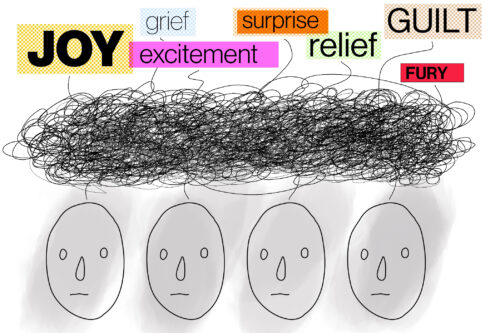
Computational model mimics humans’ ability to predict emotions
Using insights into how people intuit others’ emotions, researchers have designed a model that approximates this aspect of human social intelligence.
New tool helps people choose the right method for evaluating AI models
Selecting the right method gives users a more accurate picture of how their model is behaving, so they are better equipped to correctly interpret its predictions.