News
Filtered By
Results
A new way to look at data privacy
Researchers create a privacy technique that protects sensitive data while maintaining a machine-learning model’s performance.

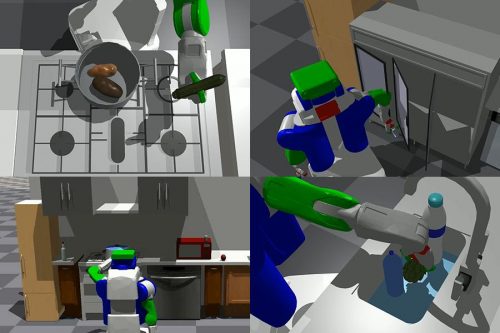
AI helps household robots cut planning time in half
PIGINet leverages machine learning to streamline and enhance household robots' task and motion planning, by assessing and filtering feasible solutions in complex environments.
Generative AI imagines new protein structures
MIT researchers develop "FrameDiff," a computational tool that uses generative AI to craft new protein structures, with the aim of accelerating drug development and improving gene therapy.

Why big changes early in life can help later on
Study shows moving can help foster a more robust social network, by strengthening “long ties” with others.

3 Questions: Honing robot perception and mapping
Luca Carlone and Jonathan How of MIT LIDS discuss how future robots might perceive and interact with their environment.

Learning the language of molecules to predict their properties
This AI system only needs a small amount of data to predict molecular properties, which could speed up drug discovery and material development.

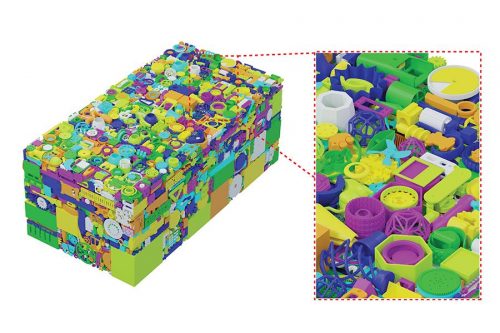
The chore of packing just got faster and easier
A new computational method facilitates the dense placement of objects inside a rigid container.
MIT scientists build a system that can generate AI models for biology research
BioAutoMATED, an open-source, automated machine-learning platform, aims to help democratize artificial intelligence for research labs.

When computer vision works more like a brain, it sees more like people do
Training artificial neural networks with data from real brains can make computer vision more robust.

MIT researchers devise a way to evaluate cybersecurity methods
The system analyzes the likelihood that an attacker could thwart a certain security scheme to steal secret information.