News
Filtered By
Results
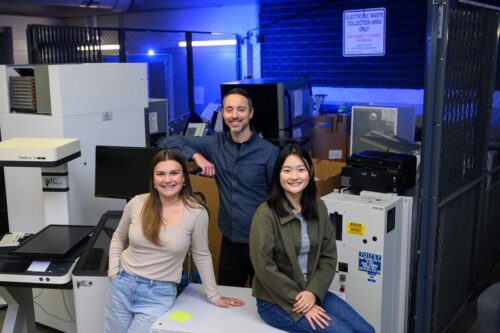
In a unique research collaboration, students make the case for less e-waste
SERC Scholars from around the MIT community examine the electronic hardware waste life cycle and climate justice.
Participatory AI highlights paths to sustainability
Sara Beery combines machine learning with human expertise to better understand a rapidly changing planet.

3 Questions: Inverting the problem of design
MIT and IBM researchers are creating linkage mechanisms to innovate human-AI kinematic engineering.

A causal theory for studying the cause-and-effect relationships of genes
By sidestepping the need for costly interventions, a new method could potentially reveal gene regulatory programs, paving the way for targeted treatments.

Despite its impressive output, generative AI doesn’t have a coherent understanding of the world
Researchers show that even the best-performing large language models don’t form a true model of the world and its rules, and can thus fail unexpectedly on similar tasks.

Empowering systemic racism research at MIT and beyond
Researchers in the MIT Initiative on Combatting Systemic Racism are building an open data repository to advance research on racial inequity in domains like policing, housing, and health care.

MIT Schwarzman College of Computing launches postdoctoral program to advance AI across disciplines
The new Tayebati Postdoctoral Fellowship Program will support leading postdocs to bring cutting-edge AI to bear on research in scientific discovery or music.

A faster, better way to train general-purpose robots
Inspired by large language models, researchers develop a training technique that pools diverse data to teach robots new skills.

Interactive mouthpiece opens new opportunities for health data, assistive technology, and hands-free interactions
“MouthIO” is an in-mouth device that users can digitally design and 3D print with integrated sensors and actuators to capture health data and interact with a computer or phone.

Making it easier to verify an AI model’s responses
By allowing users to clearly see data referenced by a large language model, this tool speeds manual validation to help users spot AI errors.
