News
Filtered By
Results
Images that transform through heat
The Thermochromorph printmaking technique developed by CSAIL researchers allows images to transition into each other through changes in temperature.

How hard is it to prevent recurring blackouts in Puerto Rico?
Using the island as a model, researchers demonstrate the “DyMonDS” framework can improve resiliency to extreme weather and ease the integration of new resources.

Ecologists find computer vision models’ blind spots in retrieving wildlife images
Biodiversity researchers tested vision systems on how well they could retrieve relevant nature images. More advanced models struggled with more research-specific prompts.

MIT researchers introduce Boltz-1, a fully open-source model for predicting biomolecular structures
With models like AlphaFold3 limited to academic research, the team built an equivalent alternative, to encourage innovation more broadly.
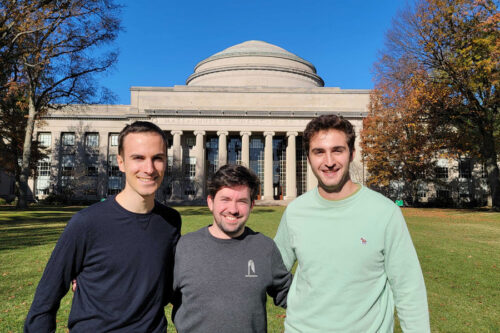
Study reveals AI chatbots can detect race, but racial bias reduces response empathy
Researchers at MIT, NYU, and UCLA develop an approach to help evaluate whether large language models like GPT-4 are equitable enough to be clinically viable for mental health support.

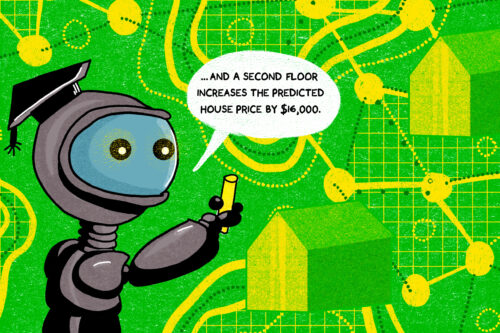
Enabling AI to explain its predictions in plain language
Using LLMs to convert machine-learning explanations into readable narratives could help users make better decisions about when to trust a model.
A new way to create realistic 3D shapes using generative AI
Researchers propose a simple fix to an existing technique that could help artists, designers, and engineers create better 3D models.

MIT researchers develop an efficient way to train more reliable AI agents
The technique could make AI systems better at complex tasks that involve variability.

Advancing urban tree monitoring with AI-powered digital twins
The Tree-D Fusion system integrates generative AI and genus-conditioned algorithms to create precise simulation-ready models of 600,000 existing urban trees across North America.

Can robots learn from machine dreams?
MIT CSAIL researchers used AI-generated images to train a robot dog in parkour, without real-world data. Their system demonstrates generative AI's potential for creating robotics training data.
