News
Results
Reasoning and reliability in AI
PhD students interning with the MIT-IBM Watson AI Lab look to improve natural language usage.

Stratospheric safety standards: How aviation could steer regulation of AI in health
An interdisciplinary team of researchers thinks health AI could benefit from some of the aviation industry’s long history of hard-won lessons that have created one of the safest activities today.

Multiple AI models help robots execute complex plans more transparently
A multimodal system uses models trained on language, vision, and action data to help robots develop and execute plans for household, construction, and manufacturing tasks.

Inclusive research for social change
The MIT Student Research Program pairs underrepresented students with opportunities to examine inequity through the IDSS Initiative for Combatting Systemic Racism.

AI agents help explain other AI systems
MIT researchers introduce a method that uses artificial intelligence to automate the explanation of complex neural networks.

Leveraging language to understand machines
Master’s students Irene Terpstra ’23 and Rujul Gandhi ’22 use language to design new integrated circuits and make it understandable to robots.

A flexible solution to help artists improve animation
This new method draws on 200-year-old geometric foundations to give artists control over the appearance of animated characters.

Image recognition accuracy: An unseen challenge confounding today’s AI
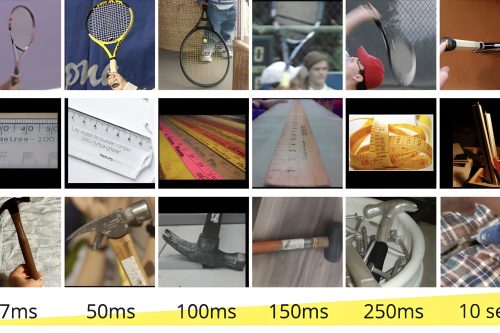
“Minimum viewing time” benchmark gauges image recognition complexity for AI systems by measuring the time needed for accurate human identification.
A computer scientist pushes the boundaries of geometry
Justin Solomon applies modern geometric techniques to solve problems in computer vision, machine learning, statistics, and beyond.

MIT group releases white papers on governance of AI
The series aims to help policymakers create better oversight of AI in society.