Tayebati Postdoctoral Fellowship Program
The Tayebati Postdoctoral Fellowship Program at MIT supports exceptional researchers whose work explores the transformative potential of artificial intelligence (AI) in select science and engineering fields or in music.
Hosted by the MIT Schwarzman College of Computing, the program fosters research at the forefront of AI, where novel computational approaches can advance scientific discovery or expand the possibilities of music composition and performance. By encouraging ambitious, interdisciplinary scholarship, the fellowship seeks to generate meaningful progress both within these domains and in the development of new AI methods more broadly.
Tayebati Fellows benefit from an environment designed to support their academic and professional growth while enabling them to pursue ambitious, high-impact research. Each fellow is jointly mentored by an MIT faculty member in their chosen disciplinary area and an MIT faculty member who works in artificial intelligence, fostering interdisciplinary collaboration and innovation.
Program Details & Benefits
Candidates should pursue research that combines AI with one of the following six disciplinary areas:
- Biology or Bioengineering
- Brain and Cognitive Sciences
- Chemistry or Chemical Engineering
- Materials Science and Engineering
- Music
- Physics
A key aspect of the program, and of the candidate selection process, is the identification of relevant MIT faculty mentors. In the application form, applicants should provide names of faculty at MIT who are closest to their proposed work, both in the disciplinary area and in AI.
MIT now invites applications for the 2027–2028 cohort of fellows. Prospective fellows must have received their doctoral degree between January 1, 2024 and August 31, 2027 and must start no later than September 1, 2027. Each postdoctoral appointment is for 24 months. Continuation of the fellowship is subject to satisfactory performance, with formal performance reviews conducted annually.
Fellows will be awarded a stipend starting at $82,400 annually, plus MIT benefits. The program will also provide recipients with computing resources, travel grants for academic conferences, and a variety of programmatic activities.
Visa sponsorship is not available.
Complete applications must be submitted by 11:59 pm ET on November 1, 2026.
Please email scc-postdocs@mit.edu with any questions.
2025-2026 Tayebati Fellows
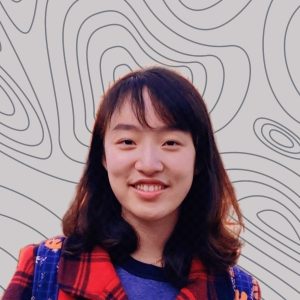
Congyue Deng completed her PhD in computer science at Stanford University. Her research interests include 3D computer vision and geometric deep learning. Her work focuses on designing feature representations for visual understanding that incorporate symmetries and geometric relations. She received her BS in mathematics from Tsinghua University in 2020 with the top GPA in her class (1/114). She is also a recipient of the CPAL Rising Star Award in 2025.
Faculty mentors: Marin Soljacic (Physics), Bill Freeman (EECS)
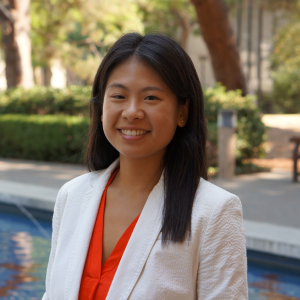
Berthy Feng completed her PhD in computing and mathematical sciences at Caltech. While receiving her PhD, she was advised by Katie Bouman. She received her undergraduate degree in computer science at Princeton University. Berthy works on computational imaging, computer vision, and machine learning. She is primarily interested in developing data-driven and physics-based methods for scientific imaging.
Faculty mentors: Mike Williams (Physics), Bill Freeman (EECS)
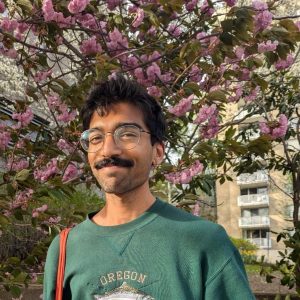
Gokul Gowri completed his PhD at Harvard in systems, synthetic, and quantitative biology. He builds computational and statistical tools to better understand living systems. At Harvard, he worked closely with Peng Yin and Allon Klein on problems related to information theory, representation learning, and single-cell genomics.
Faculty mentors: Jonathan Weissman (Biology), Stephen Bates (EECS)
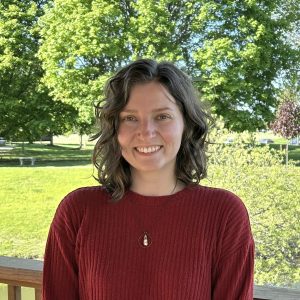
Emily Oliphant completed her PhD in materials science and engineering and scientific computing at the University of Michigan. During her PhD, she was co-advised by Wenhao Sun and Emmanouil Kioupakis. She received her BS in physics from Idaho State University in 2020, where she worked in particle physics at the Idaho Accelerator Center before shifting her focus to materials physics.
Faculty mentors: Jeff Grossman (DMSE), Tess Smidt (EECS)
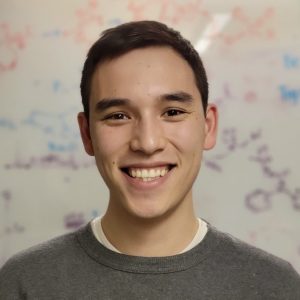
Jonas Rein completed his PhD in organic chemistry at Cornell University. He was born in Germany and grew up in Mainz, where he completed his BS in chemistry at Johannes-Gutenberg University in 2019, working with Siegfried Waldvogel on the electrochemical oxidation of arenes. During his PhD, he worked closely with Song Lin on organic redox chemistry and was supported by an ERP fellowship.
Faculty mentors: Masha Elkin (Chemistry), Connor Coley (ChemE/EECS), Stephen Bates (EECS)