News
Results
Why big changes early in life can help later on
Study shows moving can help foster a more robust social network, by strengthening “long ties” with others.
3 Questions: Honing robot perception and mapping
Luca Carlone and Jonathan How of MIT LIDS discuss how future robots might perceive and interact with their environment.
Learning the language of molecules to predict their properties
This AI system only needs a small amount of data to predict molecular properties, which could speed up drug discovery and material development.
Building connections
PhD student Will Sussman studies wireless networks while fostering community networks.
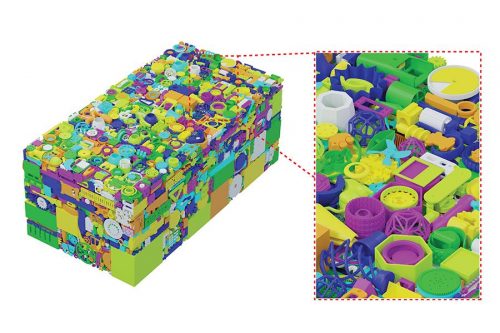
The chore of packing just got faster and easier
A new computational method facilitates the dense placement of objects inside a rigid container.
MIT scientists build a system that can generate AI models for biology research
BioAutoMATED, an open-source, automated machine-learning platform, aims to help democratize artificial intelligence for research labs.
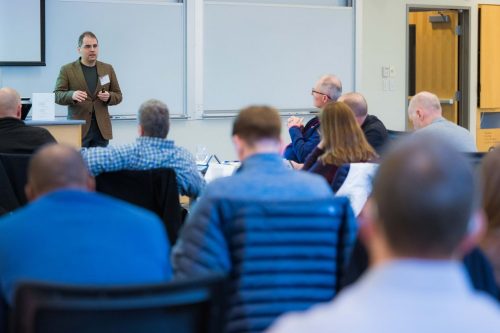
Educating national security leaders on artificial intelligence
Experts from MIT’s School of Engineering, Schwarzman College of Computing, and Sloan Executive Education educate national security leaders in AI fundamentals.
When computer vision works more like a brain, it sees more like people do
Training artificial neural networks with data from real brains can make computer vision more robust.
MIT researchers devise a way to evaluate cybersecurity methods
The system analyzes the likelihood that an attacker could thwart a certain security scheme to steal secret information.

Computer vision system marries image recognition and generation
MAGE merges the two key tasks of image generation and recognition, typically trained separately, into a single system.